The Riches of the Old Head
An Irish Childhood Remembered · Padder’s Story
We didn’t have much money growing up in Ireland in the fifties and sixties, but I don’t remember thinking we were poor. Perhaps we were, by today’s standards. There were certainly things we couldn’t afford, but there were very few things we really needed that we couldn’t manage without.
We had the countryside, the rivers, the sea, and a freedom that, as I think back now, seems more and more rare in today’s world. That loss shapes much of what I remember here.
As young fellows, we went everywhere on our bicycles. A bicycle was a wonderful possession. Once you had one, the roads of Ireland were yours. There was no road tax, no insurance, no petrol to buy and nobody looking for a payment at the end of the month. You pumped up the tyres, oiled the chain and went wherever your legs would take you.
Then the Honda 50 arrived, and with it came a new kind of freedom.
It was a remarkable little machine, and to us it felt like a big step forward. Now we had a bicycle that did the pedalling for you. Suddenly, trips that once took hours of hard cycling became easy.
My friend Dinjoe and I were quick to appreciate its possibilities.
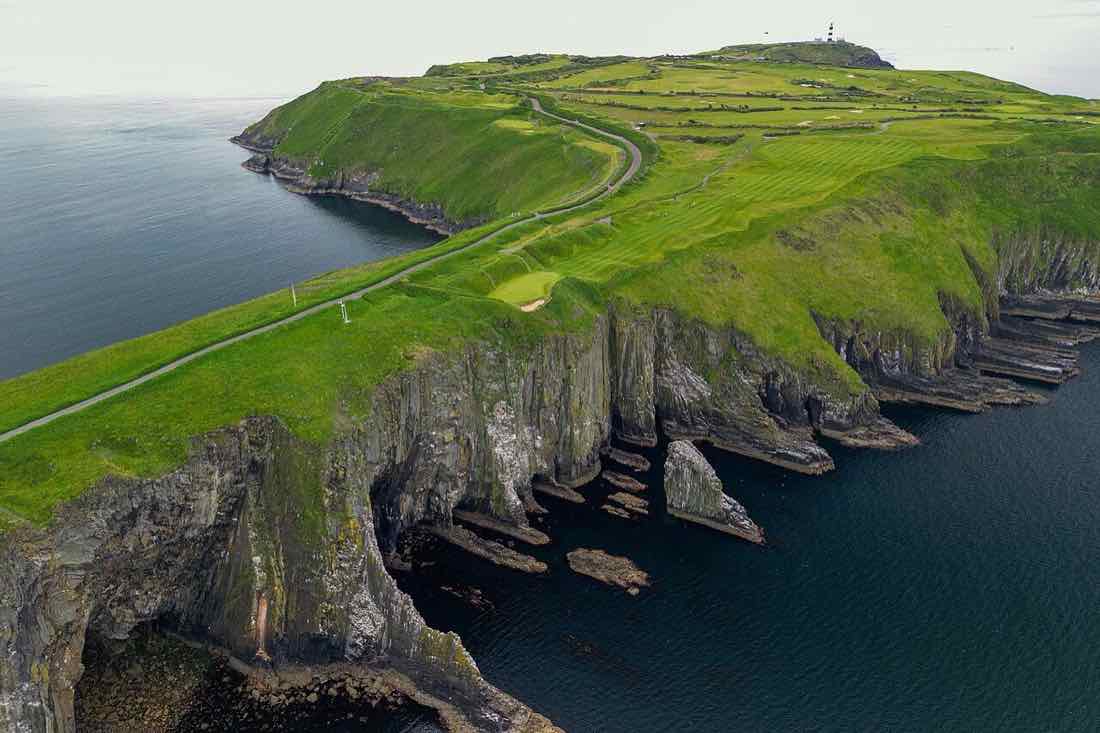
We had an old Honda 50, and one of our favourite expeditions was the thirty-mile journey from Cork to the Old Head of Kinsale, where the Atlantic rolled against the great cliffs and the fishing was as good as anywhere in the world.
The same road
There was only one thing about the Honda that Dinjoe couldn’t understand.
The government wanted us to pay tax and insurance.
Now, Dinjoe was a practical man. He could see the sense in paying for petrol because you got petrol. He understood that a tyre eventually wore out and had to be replaced. But paying money simply for the right to use a machine that you had already bought struck him as a most peculiar arrangement.
“Tell me this, Padder,” he’d say. “If I went down to Kinsale on a bicycle, I wouldn’t have to pay road tax, would I?”
“No, Dinjoe.”
“And I wouldn’t have to pay insurance?”
“No.”
“But if I put an engine on the bicycle, I have to pay both?”
“That’s the law.”
He would consider this for a moment.
“But sure, it’s the same road.”
I would patiently explain that the Honda was a motor vehicle and that the law made certain distinctions between a pedal bicycle and a mechanically propelled one.
Dinjoe wasn’t convinced.
“So they’re taxing me because I don’t have to pedal?”
It was difficult to explain modern government to a man who believed the roads were there for people to travel on.
Looking back, I see these memories mean more than just personal adventures. They show how much Irish society changed over the years. When we were young, people relied on themselves, and most things didn’t cost money or need outside help. Over time, this way of life faded, replaced by a world where buying and rules shape what we do. We lost some of our shared resourcefulness and freedom, and now society is more controlled by markets and government.
Watching for the Bandon car
In any event, our road tax was frequently out of date, and we had a particular interest in the movements of the Bandon Garda car.
With two of us squeezed onto the Honda, fishing rods sticking out and tackle rattling behind us, we would set off down the road, keeping one eye on the traffic and the other on the possibility of meeting the guards.
Dinjoe was as alert to the Bandon car as he was to the movement of a fish beneath the water.
But once we left the town behind, the countryside opened out before us.
The roads were quieter in those days. We passed fields divided by hedgerows, little farms, stone walls and cottages that seemed to belong naturally to the landscape. There was a rhythm to country life. The seasons mattered. The weather mattered. People knew the land because they lived by it.
We weren’t travelling through scenery arranged for our enjoyment. We were passing through a living countryside, where people worked, animals grazed, and the natural world was part of everyday existence.
Lugworms and spark plugs
Our first stop was usually a sandy cove where we could dig for lugworms.
Dinjoe was careful about choosing bait. He always wanted to dig it up himself. He didn’t trust anything he hadn’t found on his own, which showed how practical he was and how much he liked to rely on himself when fishing.
We would arrive at low tide, take out our forks and begin digging. The wet sand was alive with the little signs that told an experienced fisherman where the worms might be found.
Above us, the gulls wheeled and called. The sea stretched away beyond the exposed sands, and there was that wonderful smell of salt water, seaweed and the living shore.
We needed no shop, no expensive equipment and no elaborate preparations. The bait was there beneath our feet, if we were willing to put in a little work.
And it wasn’t just the bait we found ways to save money on.
A six-ounce fishing lead was another expense, and there was always the possibility of losing it among the rocks. Once it became snagged on the bottom, you could pull and tug all you liked, but more often than not the line would break, and that was the end of your lead.
We had a much cheaper solution.
The local car mechanic was more than happy to part with a few old spark plugs. They were of no further use to him, but to us they were perfectly good fishing weights.
Tie a piece of line around an old spark plug, and you had a makeshift sinker that cost absolutely nothing. It might not have weighed the full six ounces, but it did the job.
And if you lost it among the rocks, it wasn’t a great tragedy. Plenty more were like that one.
Dinjoe regarded this as an excellent arrangement.
“Why would you pay good money for a lump of lead, Padder, when you can get a spark plug for nothing?”
It was difficult to disagree with him.
In those days, we didn’t think of this as recycling or protecting the environment. We didn’t believe in throwing away something that could still serve a useful purpose. What was rubbish to one man might be exactly what another man needed.
The mechanic had no further use for his spark plugs. We had no desire to spend money on fishing leads. Everybody was satisfied.
And nobody had thought of turning the arrangement into a business.
Once we had enough bait, we packed up and continued towards the Old Head.
I often think now about how little we carried on those expeditions. A few rods, some hooks and line, a bag for the fish, the lugworms we had dug ourselves and a handful of old spark plugs.
There was no great collection of specialist equipment, no complicated machinery and certainly no need to purchase every new invention that appeared on the market.
We had what we needed, and what we needed was enough.
Down the cliff
The Old Head itself was a magnificent place.
The cliffs stood high above the restless Atlantic, their faces worn by wind and salt spray that made the rock cold and slippery. Far below, waves crashed again and again against old, jagged rocks, sending up foam and spray that smelled of the sea. There were no easy steps down to where we fished. We had to move carefully along the uneven cliff, with loose stones under our boots and the cold sea breeze on our faces. Each time we climbed down, we had to be careful, feeling for safe spots, holding onto the rough, wet rock, and always aware of the drop below us.
It was dangerous enough, though I don’t suppose we thought much about it at the time. We were young, and young fellows have a way of believing that the world will make allowances for them.
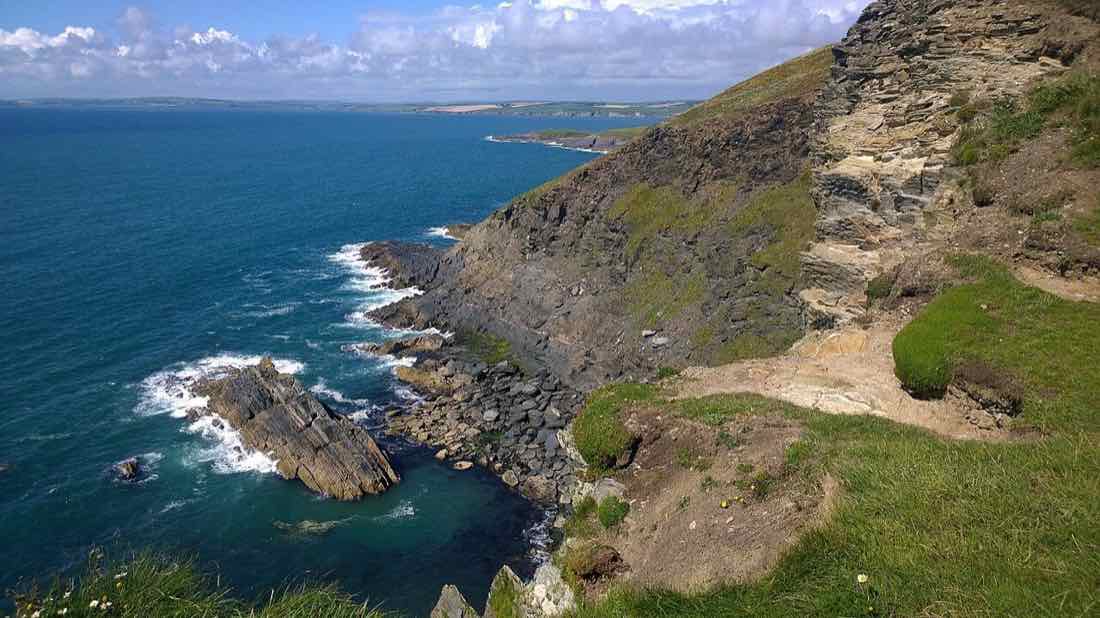
Eventually, we would reach one of the great rocky ledges above the water.
Here the sea was deep, even close to the cliffs. The tide hardly seemed to matter. There was always water moving around the submerged rocks and ledges, and somewhere among them the pollock were hunting.
Pollock off the rocks
We would bait our hooks and cast out into the Atlantic.
Then came the waiting.
Sometimes a fish would take almost immediately. You would feel that sudden pull on the line, strike, and the battle would begin. The pollock were strong fish, and a good one would dive straight towards the rocks, trying to break the line.
You had to keep your wits about you.
Dinjoe would be working away a little further along the ledge, and before long there would be a shout.
“Have you one, Padder?”
“I have!”
“Is he a good one?”
“He’ll do!”
And then the same excitement would begin all over again when Dinjoe hooked a fish of his own.
What struck us most was the abundance.
You were almost sure of a bag of fish every evening.
The pollock moved in small shoals among the rocks, and when you found them, the fishing could be tremendous. Fish seemed to be everywhere, and the sea possessed a richness we simply took for granted.
We didn’t think of ourselves as harvesting a resource. We were simply going fishing.
The fish would be brought home, cleaned and cooked, and there was something deeply satisfying in knowing that the evening’s expedition had provided a fine meal. If there was more than we needed, someone would always be glad of a fresh fish.
There was no need to make a fortune from the sea. Its generosity was reward enough.
Knowing the sea
Of course, we didn’t speak about the environment in those days. It wasn’t a word that entered our conversations. We spoke about the weather, the tides, the fish and whether the sea would be calm enough to get down onto the ledges.
But we knew the natural world in a way that I sometimes think is becoming rare.
We knew where to find lugworms. We knew where the pollock gathered. We could read the movement of the sea and recognise the approach of bad weather. We knew that a change in the wind could alter the whole character of a fishing place.
It wasn’t knowledge acquired from books. It came from being there, from watching, listening and doing the same things over and over again.
And it cost us almost nothing.
As the evening wore on, the light began to soften over the Atlantic. The cliffs took on a different colour, the gulls settled into their evening movements, and the great ocean stretched out before us.
There were moments when neither of us spoke.
We stood there with our rods, watching the water.
Back then, we didn’t realize how lucky we were or how much those days would mean to us as we grew older. Looking back now, it’s clear that those ordinary moments gave us more than just happiness at the time—they helped shape who we became and what we value. The simple pleasures and challenges of those days, which we barely noticed as kids, played a big part in building our sense of fulfillment and contentment.
We had no great possessions, but we had the freedom to travel, the friendship of one another and an entire ocean in which to cast a fishing line. That was enough, and perhaps more than enough. We had enough, and that was why we were rich. We were rich in freedom, in friendship and in the life we had lived.
The Speckled Door
Eventually, it was time to gather our belongings and begin the climb back up the cliff, carrying with us the memory of another evening well spent.
Coming down was difficult enough, but climbing back up with rods, tackle, and a bag of pollock was another matter. There were occasions when I wondered whether the fish were worth the trouble.
But that thought never lasted long.
For there was one more stop to be made before returning to Cork.
The Speckled Door.
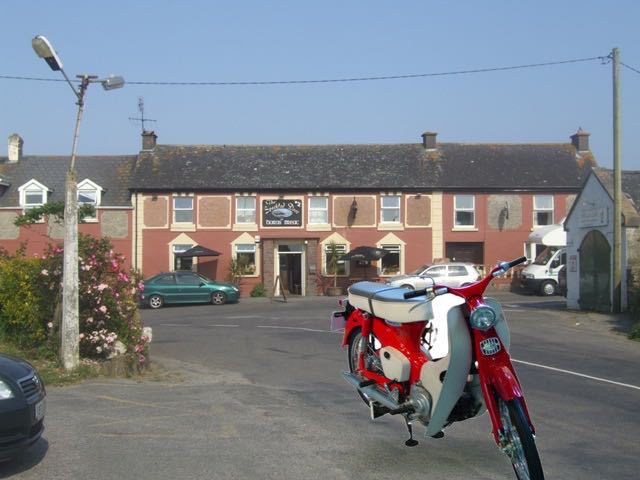
After an evening on the cliffs, a few pints of Murphy’s stout seemed a fitting reward for our exertions.
We would settle ourselves down and begin discussing the fishing.
Now, you might imagine that two fellows who had caught a fine bag of pollock would be content to talk about the fish they had landed.
Not at all.
The most important fish of the evening was invariably the one that got away.
Dinjoe was especially gifted at describing these encounters.
A perfectly respectable pollock that had slipped the hook near the rocks would, after the first pint, become a very substantial fish indeed.
By the second pint, it had acquired extraordinary strength.
And by the third, it was a wonder the creature hadn’t pulled Dinjoe himself into the Atlantic.
I listened with the patience of a man who understood the difference between fact and embellishment, though I must confess my own lost fish occasionally grew as the evening progressed.
The wonderful thing about those evenings was the conversation.
There were no screens to distract us, no endless stream of messages demanding attention, and no great urgency to be somewhere else. We had a table, a few pints of stout, our stories and the pleasure of one another’s company.
The entertainment was something we made ourselves.
Sooner or later, Dinjoe would return to the great question of the Honda 50.
He still couldn’t understand why a man could travel freely on a pedal bicycle but had to pay tax and insurance the moment he fitted an engine.
I would explain once again the principles of motor vehicle legislation and third-party liability.
He listened politely, took another sip of Murphy’s, and asked the question that defeated every explanation.
“But Padder, isn’t it still the same road?”
I sometimes think Dinjoe was a philosopher born into the wrong century.
He saw life in wonderfully simple terms. A road was for travelling, a fishing rod was for catching fish, the sea provided fish, and a motorcycle was supposed to make getting from one place to another easier.
Why anybody should wish to complicate such straightforward arrangements was beyond him.
Sovereign in our own minds
In our own way, I suppose, we were sovereign citizens long before the expression became fashionable.
Not in the legal sense, of course. The law applied to us just as it applied to everybody else, whatever Dinjoe thought of road tax.
But we possessed a kind of sovereignty that had very little to do with politics.
We were free in our own minds.
We didn’t require much money to enjoy ourselves. We weren’t dependent on expensive entertainments, elaborate holidays or an endless supply of new possessions. We knew how to make a day out of what was available to us.
An old Honda 50 could bring us thirty miles to the Atlantic. A fork could provide our bait. An old spark plug could replace a fishing lead. A fishing rod could put food on the table. And a few pints of Murphy’s could turn an ordinary evening into a story we’d remember for the rest of our lives.
There was a sufficiency about life that I find difficult to describe to younger generations.
I don’t mean that everybody was comfortable or that poverty didn’t exist. There were hardships, and plenty of them. People worked hard, money was scarce, and opportunities were limited in ways that are easy to forget.
But there was also something of great value in that world.
We understood the difference between what we needed and what we merely wanted.
We repaired things. We made do. We shared what we had. There was no shame in owning something old, as long as it still did the job.
The Honda might have been battered and the tax disc out of date, but it brought us to the Old Head and home again.
What more could we ask of it?
Abundance freely given
I sometimes question whether today’s society mistakes abundance for excess.
Today, we have more things, technology, and conveniences than ever before, and more ways to spend money than any generation before us. Still, we’re often made to feel like what we have isn’t enough. This constant push to want more changes how we act as consumers and shows a bigger shift in our values, where having more is seen as the way to feel fulfilled, instead of appreciating what we already have.
Something newer, faster, bigger or more expensive is always being offered as the answer.
And in the middle of all this manufactured abundance, we seem in danger of losing our appreciation for the abundance that was freely given.
The Atlantic Ocean, changing seasons, and the company of friends all came together to create the simple pleasures that made our evenings so special. Real abundance, I think, comes from what nature gives us and the connections we share with others.
None of these needed improvement through the purchase of something else.
I sometimes wonder what became of the pollock that gathered around those submerged rocks beneath the Old Head. Whether a young fellow today could climb down with a simple fishing rod and be as confident of returning with a bag of fish as we were.
I hope he could.
For that would be a greater inheritance than any collection of possessions we might leave behind.
It would mean the richness we enjoyed hadn’t been used up in the pursuit of something more.
When I remember those evenings now, I don’t see the fish we caught so much as the whole adventure.
I see Dinjoe sitting on the old Honda 50, preparing to set off, still arguing about the road tax.
I see the wet sand beneath our forks, the gulls overhead and the Atlantic breaking against the cliffs.
I see the old spark plugs we carried in our tackle, things another man had thrown away but which were worth something to us.
I see the bags of pollock, the climb back up the rocks and the familiar welcome of the Speckled Door.
And, naturally, I remember the one that got away.
But above all, I remember the wonderful feeling that life had given us everything necessary for happiness, and that it was largely up to ourselves to make use of it.
We weren’t wealthy men.
We had no great ambitions to accumulate possessions, no desire to conquer the world, and no particular interest in impressing anybody.
We just wanted to get to the Old Head, catch a few fish and enjoy ourselves.
In the end, what made those days truly rich wasn’t just having enough, but knowing it. That awareness shaped how fulfilled we felt and still stands out as the lasting gift from that time.
Padder Murphy
More from Padder's Tales: Padder Murphy's story · Gathering at Ballyandreen · Seaweed recipes